4 C's of Diamonds Guide
The 4 C's of diamonds — cut, color, clarity, and carat — are the characteristics that determine a diamond's quality grade according to industry standards. This diamond guide explores each quality factor in detail.
4 C's of Diamonds Charts
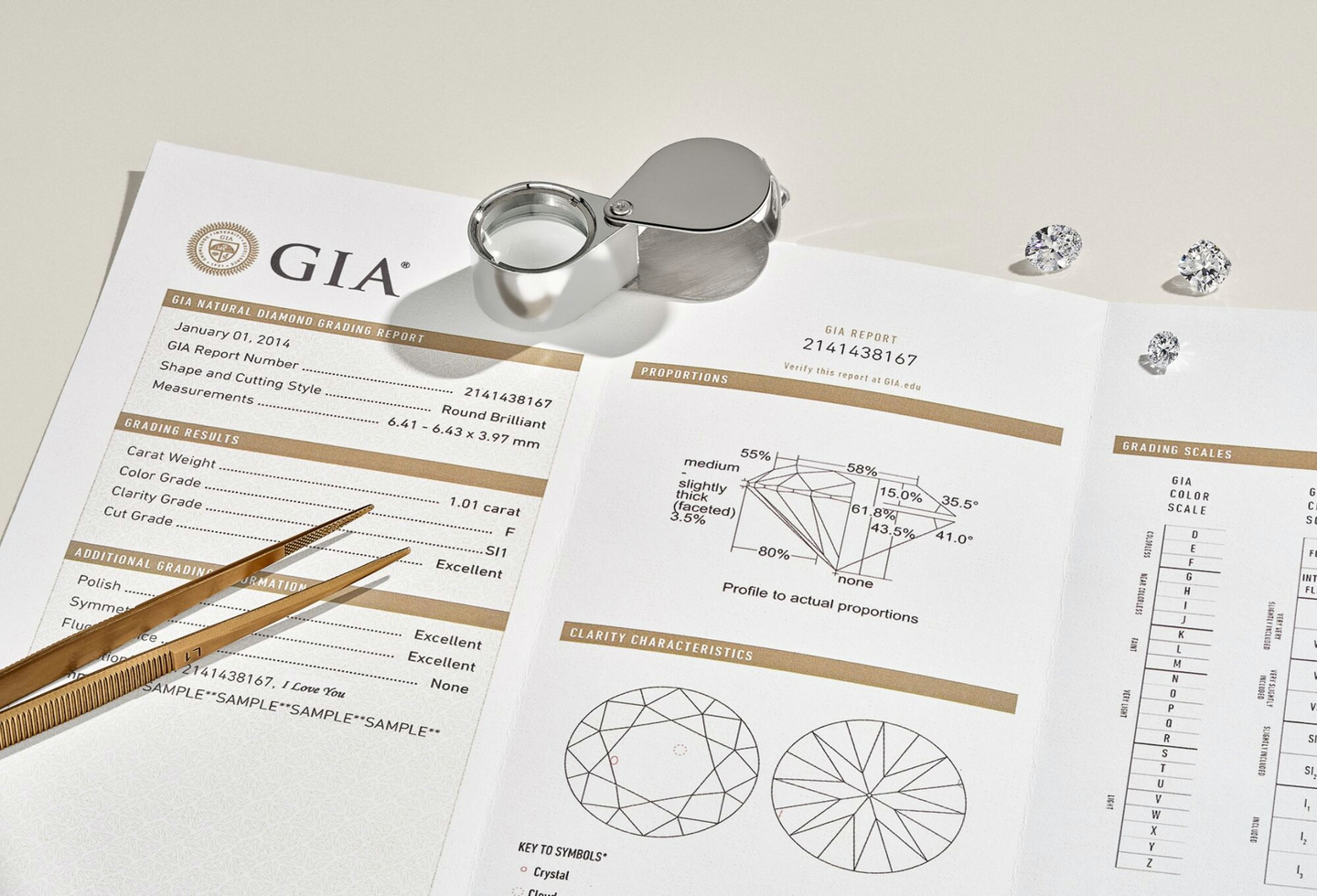
Created by the Gemological Institute of America (GIA) in the 1940s, the 4 C's — cut, color, clarity, and carat — serve as the universal standard for assessing diamond quality. Each C represents a distinct quality attribute, measured on its own scale:
- Cut: Graded from Excellent to Poor on the GIA scale and Ideal to Poor on the International Gemological Institute (IGI) scale
- Color: Graded from D (colorless) to Z (light yellow or brown)
- Clarity: Graded from Flawless (FL) to Included (I3)
- Carat: Measured in metric carats, where one carat equals 200 milligrams
Diamond Cut
Cut determines how effectively a diamond's facets interact with light, creating the gem's signature brilliance and sparkle. Unlike other diamond characteristics that form during the growth process, cut quality results from the diamond cutter's skill and precision. A masterfully cut diamond reflects optimal brilliance, disperses vivid fire-like colors, and creates dynamic sparkle patterns when moved (this is called scintillation).
The GIA grades diamond cut from Excellent to Poor based on proportions that maximize light performance. An Excellent cut diamond returns nearly all light that enters the gem, resulting in exceptional sparkle and visual impact. In contrast, a Poor cut allows light to escape through the pavilion (bottom), resulting in a dull appearance regardless of the diamond's other qualities.
Diamond Cut Guide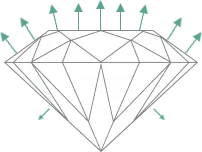
Very Good
Superior quality cut that reflects nearly as much light as the ideal cut while at a substantially lower cost.
H Color
Near-colorless. Color noticeable when compared to diamonds of better grades, but offers excellent value.
Diamond Color
Diamond color refers to the absence of color, with completely colorless diamonds being the most valuable and rare. The GIA color grading scale ranges from D (colorless) to Z, with each letter grade representing a subtle increase in color saturation. Diamonds that fall outside this range — such as vivid pinks or blues — are classified as "fancy colored" and are evaluated differently.
Color becomes increasingly noticeable as carat weight increases, making color grade particularly important when selecting larger diamonds. Strategic color selection should balance budget considerations with:
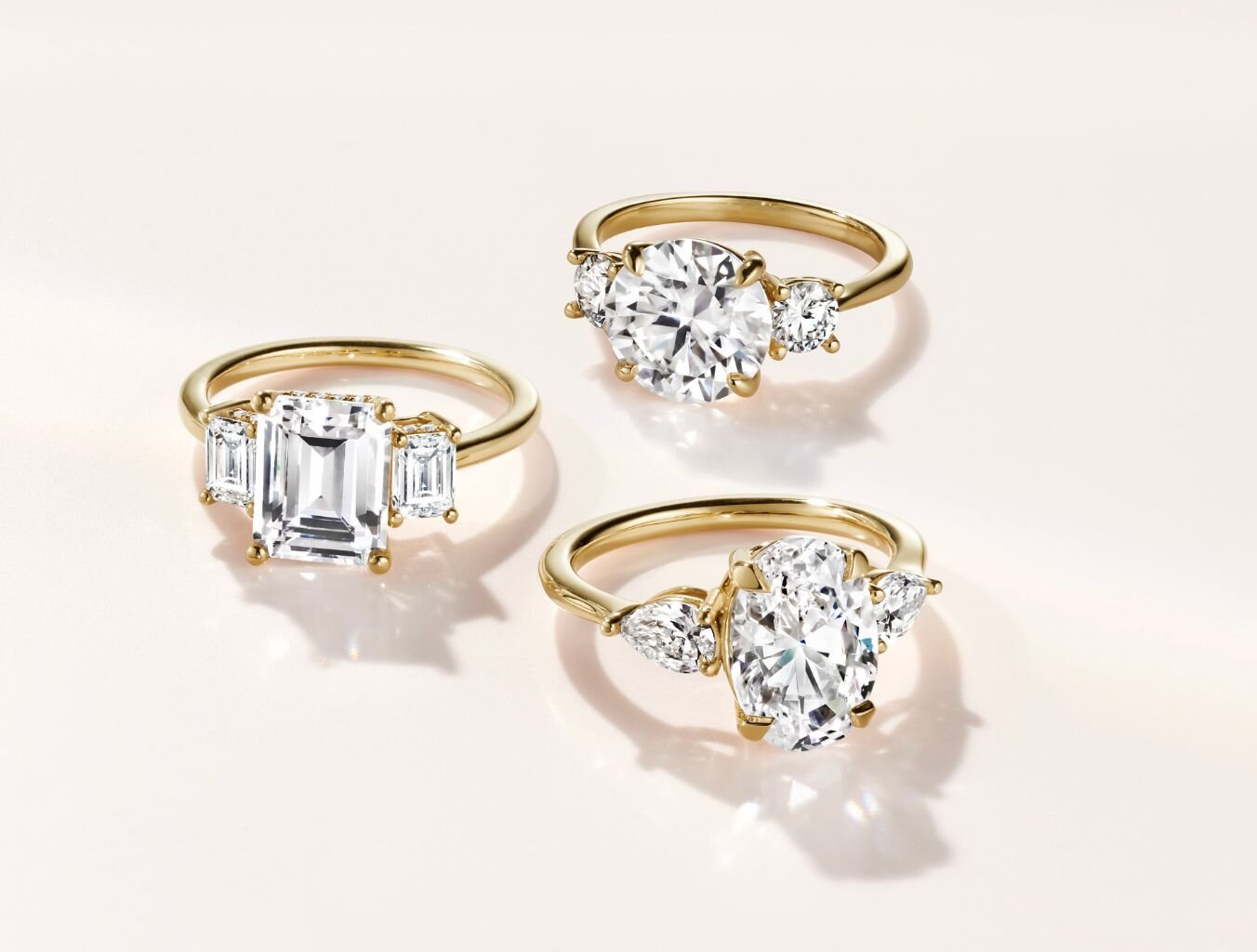
- Your chosen mounting style (yellow gold can make near-colorless diamonds appear whiter)
- Diamond size (larger diamonds reveal color more readily)
- Diamond shape (step-cut emerald and asscher shapes tend to display more color than brilliant cuts, which mask color with their superior light-dispersing properties)
Diamond Size
Diamond size — distinct from carat weight though often mistakenly used interchangeably — refers specifically to a gem's physical dimensions and visual presence, most commonly measured in millimeters across the widest points.
When evaluating size, consider actual millimeter measurements rather than relying solely on carat weight. A standard 1-carat round brilliant typically measures about 6.5mm in diameter, while a well-cut oval or marquise of the same weight may appear larger due to their elongated shape and greater spread.
For engagement rings, the setting style further influences perceived size — halos (small diamonds surrounding the center gem) can make a diamond appear larger, while cathedral settings elevate the gem for greater prominence.
MM to Carat Weight Conversion GuideTypes of Diamonds
Natural Diamonds
Natural diamonds form deep within the Earth under extreme conditions of heat and pressure over billions of years. They are comprised of nearly 99.95% carbon — making diamonds the only gemstone constructed of a single element. They are the hardest naturally occurring materials found on Earth and gem-quality diamonds are one of the most sought-after. Because of their limited quantity, natural diamonds have been cherished for their enduring value and passed from generation to generation.
Lab Diamonds
Lab diamonds are optically, chemically, and physically the same as natural diamonds. Their difference lies only in their origins — natural diamonds form within the Earth, and lab diamonds are grown by professionals with specialized equipment. Another difference is cost; as lab grown diamonds are less rare than natural diamonds, they often come at a much more accessible price.